
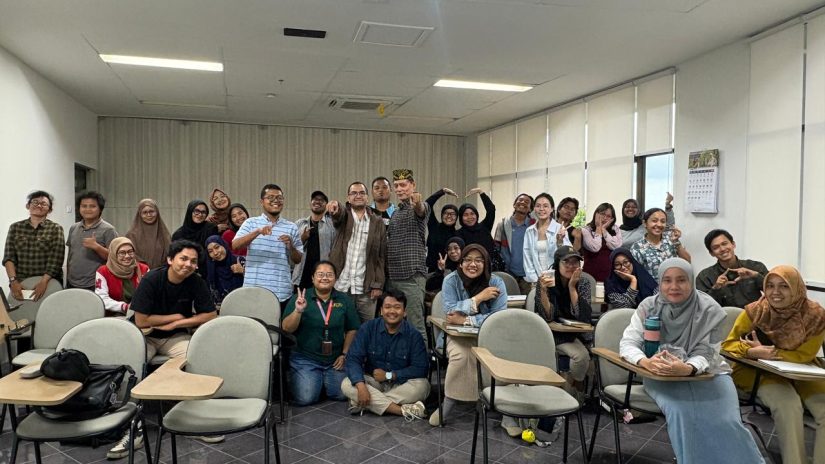
As part of the Branding and Promotional Culture course, the Master’s Program in Media and Cultural Studies (KBM) organized a Discussion Series titled “Branding the Faith” on Wednesday and Thursday, April 29–30, 2026, held in Room 307, 3rd Floor, Graduate School Building. On the first day, Dr. Leonard Chrysostomos Epafras delivered a lecture on “Branding and the Commodification of Spirituality.” In front of 60 participants, Dr. Leo—as he is commonly called—opened the session by inviting participants to stand and sing together to energize the room.
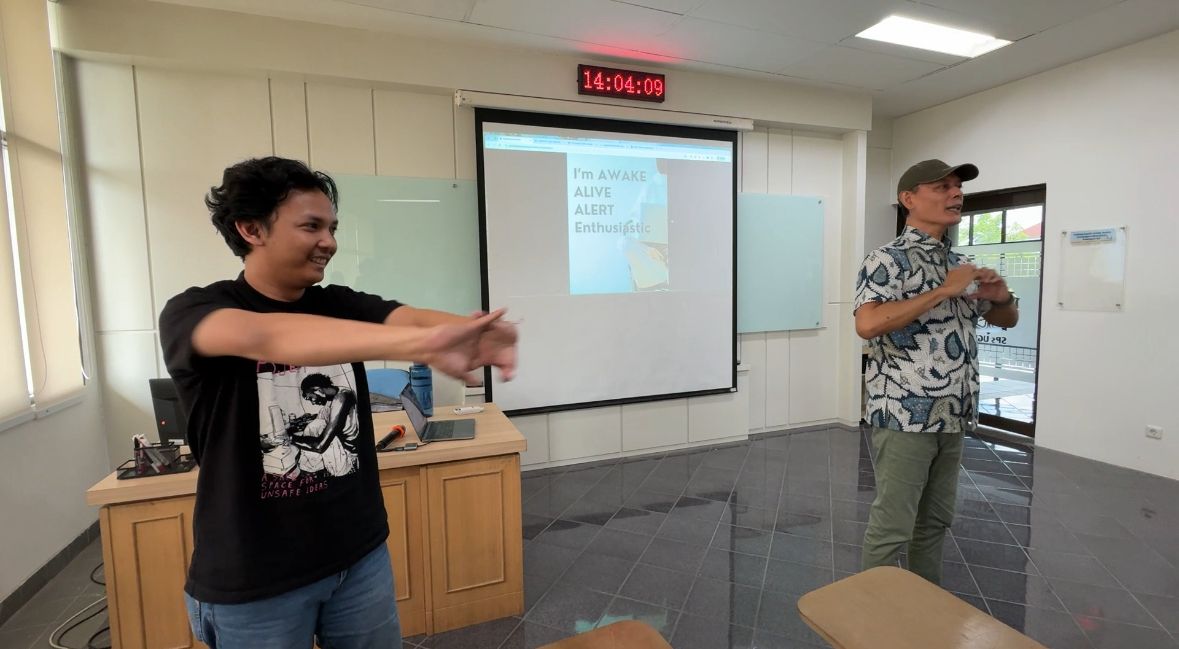
The discussion continued with the questions, “What is religion?” and “What is not religion?” According to Dr. Leo, religion can no longer be understood solely in transcendental, institutional, or substantial terms. Religious institutions today adopt media capitalism in order to survive in the “spirituality market,” and conversely, many capitalist products are packaged with religious values. In this sense, branding the faith refers to identity, differentiation, and the aggregation of meanings, expectations, and emotional resonance attached to a product—while religion itself becomes a product. Like any product, religion needs to be marketed.
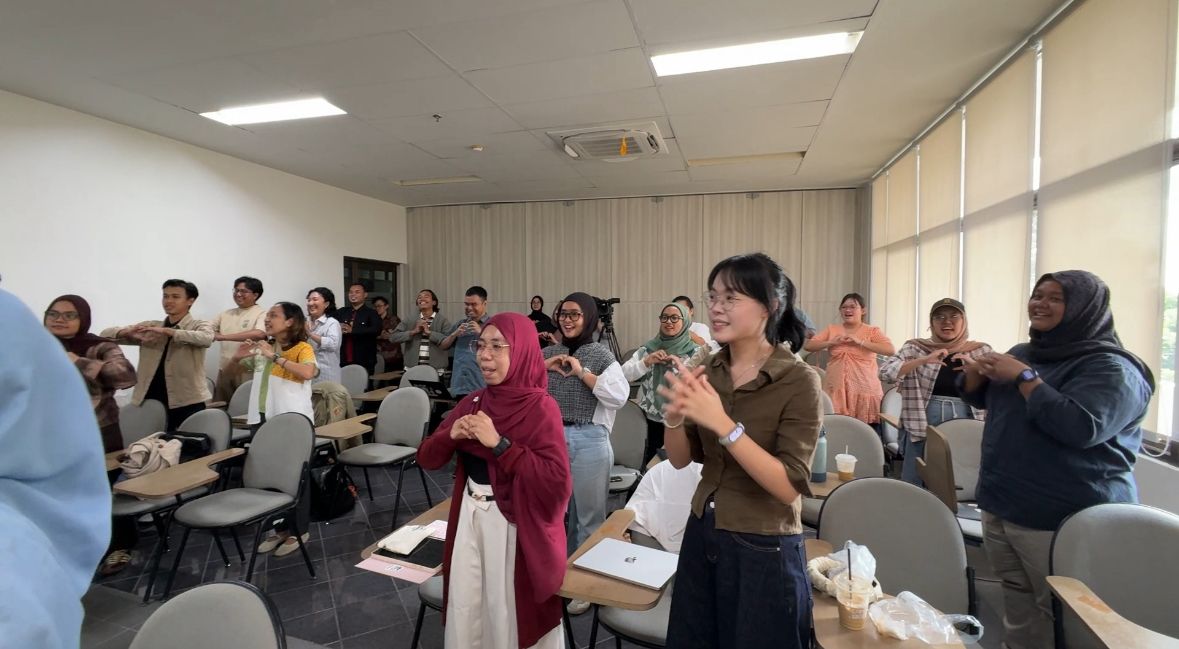
In the second session, Dr. Leo continued his discussion on the commodification of religion. He opened with an analogy comparing religion to the philosophy of furoshiki wrapping (a traditional Japanese art of wrapping), which conveys the idea that packaging is just as important as content. From here, the discussion developed toward the commodification of religion, which occurs when exchange value dominates and overtakes use value. “In the reification of religion, religion—which is an abstract concept, a social relation, or a human quality—transforms into a ‘thing’ that is ‘measurable,’” Dr. Leo explained, referring to Georg Lukács’s concept of reification.
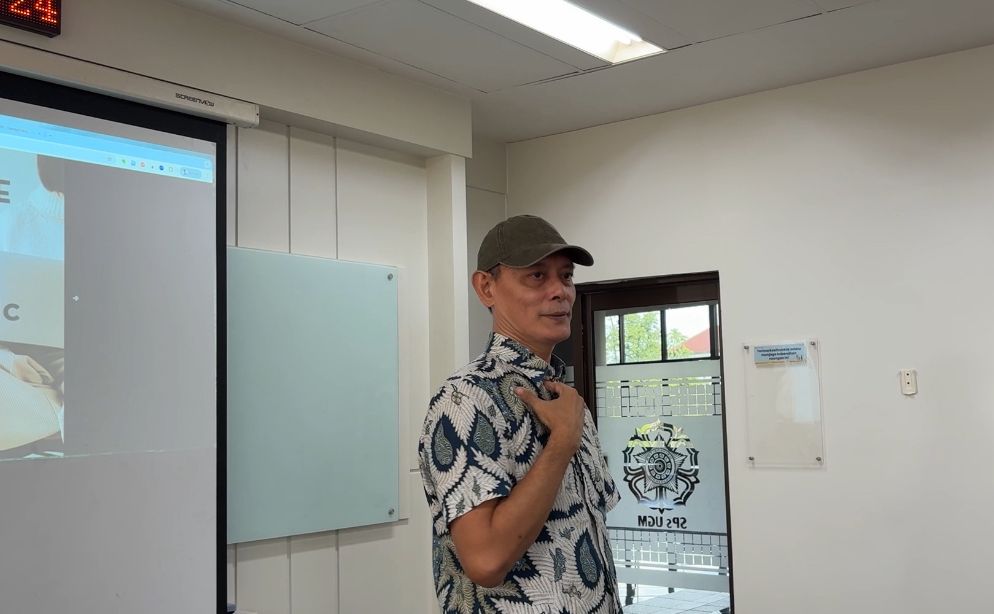
He also elaborated on the entanglement of sacred and secular logics in contemporary society, where the sacred adopts branding and marketing logic, while the secular adopts models of “dakwah” and “missionary” practices to create loyal consumers. The presentation concluded with the concept of technofeudalism by Yanis Varoufakis, in which today’s technological “landlords” are large tech companies such as Meta, Apple, and others. As a result, religious institutions, as well as individuals and faith-based corporations, are compelled to adopt media capitalism.
Contributor: Adhani J. Emha